
HIPAA Compliance Services in Hallandale Beach






HIPAA Compliance Services Overview

HIPAA Compliance Services Overview
To be HIPAA compliant, organizations must implement policies, security tools, and everyday practices that protect patient health information. It requires proof that data is safeguarded, access is limited, and issues are handled correctly. If your organization touches patient information in any way, HIPAA applies, and regulators and customers expect responsible risk management.
Who Needs HIPAA Compliance Services?
Medical & dental practices
Behavioral health & specialty clinics
Billing, RCM & transcription providers
Healthtech & SaaS handling PHI
How We Make And Keep You HIPAA Compliant
The first step is a focused discovery session examining PHI handling, storage, IT systems, vendors, and any audit pressure. We then map PHI movement to ensure controls are built on accurate information.
We focus on turning findings into action by implementing effective controls. Typical work includes stronger access controls, multi factor authentication, endpoint and email protection, hardened servers and cloud environments, secure remote access, and encrypted backup testing. We support staff to make changes routine.
What You Get with Our HIPAA Compliance Services
- Formal HIPAA Security Risk Analysis
- Technical safeguards implemented & managed
- Prioritized remediation plan
- End-user security & HIPAA awareness training
- HIPAA-aligned policies & procedures
- Vendor & Business Associate risk support
Why Choose BCA for HIPAA Compliance
Why Choose BCA for HIPAA Compliance
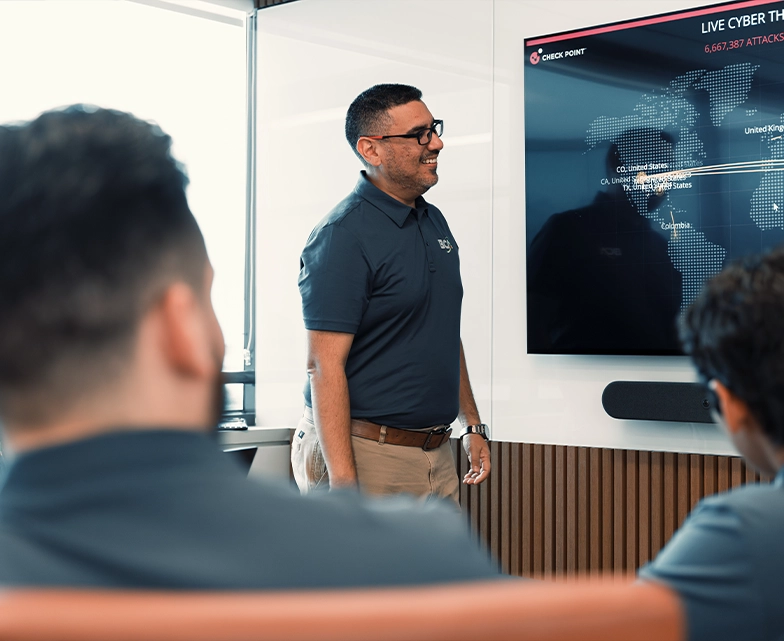
BCA supports owners who want IT managed reliably and quietly. With decades of experience in healthcare and other industries, we step into live environments and keep them stable. Our team is available day and night, offering bilingual support when needed.
We are a managed IT and cybersecurity partner with a formal Compliance as a Service program that keeps your environment secure, documented, and audit ready year round.
Security first, by design
BCA is certified under SOC 2 Type 2 and the CompTIA Cybersecurity Trustmark, validating that our controls are documented, tested, and independently assessed. We apply that same level of discipline to your organization.
Our Managed IT plus cybersecurity under one roof
We manage and support the infrastructure that powers your business while delivering security services like vulnerability management, quarterly penetration testing, endpoint and email protection, secure backups, and incident response planning.
Compliance as a Service program
Our team runs your compliance automation tool, maintains policies, supports certifications, monitors controls, and prepares audit documentation. You gain ongoing insight rather than limited point in time checks.
One accountable partner
You eliminate the complexity of managing separate IT, security, compliance, and audit vendors by working with one team that understands your technology and regulations.
Other Frameworks We Support
NIST FINRA FERPA PCI DSS GDPR CIO
CIS ISO 27001 AICPA SOC CMMC
HIPAA Compliance FAQ
Practical details on effort, timelines, risk, and how BCA fits alongside your team and vendors.
Yes. HIPAA does not set a minimum size. If you create, receive, store, or process patient information, regulators can hold you responsible regardless of how many people are on your team. Small organizations are often targeted because their security controls are easier to bypass.
Most of the heavy lifting is handled by BCA. You provide input on how you work, approve policies, and attend a few working sessions. We handle the risk analysis, technical work, documentation structure, and training content so your team is not trying to interpret regulations on their own.
No company can issue an official HIPAA certificate. What we do is design, implement, and document the controls that the rules expect, then help you stay aligned over time. That puts you in a strong position for audits, payer reviews, cyber insurance questionnaires, and internal oversight.
Regulators expect risk analysis to be an ongoing process, not a single event. At a minimum it should be updated when you have major changes such as new systems, new locations, or significant incidents. As part of our program we revisit risk on a regular schedule so you always know where you stand.

BCA IT, Inc.


